Blog
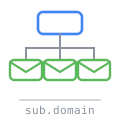
Subdomain email addresses: what they are and when to use them
Addresses like name@mail.example.com: how to read a domain from right to left, why subdomains are off by default, and how to turn them on.
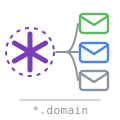
Wildcard email domains: any name before the domain works too
On a wildcard domain you choose the subdomain as well as the name before the @, and mail still arrives. How to spot these domains, how to use them and what they can’t do.
Is your domain on a spam blocklist?
Mail stops arriving and nothing tells you why. Check a domain's DNS, MX, SPF, DMARC and DKIM right in your browser, then look it up in the big blocklists — and see why no web page can query them for you.
Attachments: tickets, PDFs and files in a generated mailbox
Cinema and concert tickets, e-books, invoices and vouchers arrive as files — download them straight from the page, and leave the marketing that follows at an address you never read.
Dangerous email attachments: how to spot one before you open it
What makes an attached file dangerous, how the family_photo.jpg.exe trick works, which file types matter, what your operating system already blocks — and a 30-second check before you open anything.

Several mailboxes at once — one per browser tab
Each browser tab keeps its own generated mailbox, so codes land where you are waiting for them. The Inbox email panel remembers the addresses and the tab sets you used before.

Plus and dot tricks beyond Gmail
The dot and plus trick is famous on Gmail — but Outlook, iCloud, Proton and Fastmail have their own rules. See what works where, with a quick alias tool.

Check your domain — did the MX record work?
Added an MX record and want to know if it worked? See where a domain's mail goes and whether you can already pick it here.
How to add an MX record — a guide for popular registrars
Where the DNS panel hides and exactly what to type — MX record setup for Namecheap, GoDaddy, Cloudflare, Porkbun, Hostinger, Gandi, OVH and more.
A separate email address for every website
Give every site its own address on a domain you own — separate mailboxes, not one pile. When spam starts you know exactly who leaked it, and you switch just that address off.